Have you ever stepped into a luxury space, one alleged to be the absolute crème de la crème, and just felt like something was…off? The way it looked, felt, and functioned seemed less-than-luxurious, despite all the hype?
This problem is depressingly common, and it usually flows from one simple mistake: that space wasn’t designed for people first.
Aesthetics, architecture, and technology–if you want true luxury, all of these elements need to be top priorities. However, they must never become the top priority. That number one spot needs to stay reserved for the lived, human experience. Because above all, a home has to feel good to live in. Otherwise, why would you want to choose it as your home? And in this blog, we’re going to do a deep dive into perhaps the most powerful tool for sculpting the human experience - light.
The Biology of Light in High-End Design
Lighting that works with our natural circadian rhythms tends to feel natural, welcoming, and beautiful. However, lighting that fails to consider our biology risks seeming harsh, unnerving, even stressful. The principles of human-centric lighting design were developed around these phenomena. The goal is to understand the light conditions the human body has evolved under, particularly how natural light changes in level, intensity, and color throughout the day. Then, light designers can work to elegantly replicate these conditions inside a home to improve sleep, mood, and cortisol levels.
Morning: The "Natural" Wake-Up Call
Out in nature, diurnal lifeforms like humans tend to stir as the sun rises. The gradual increase in light during this period allows for a gentler transition from sleep to wakefulness. Fortunately, in a luxury home, you can replicate that gradual increase whenever you want. Luxury automated shades can be programmed to slowly raise automatically at the right time for you. With silent motors, the effect is as gentle as the natural sunrise, and perfect for ensuring you start your morning with a healthy hit of Vitamin D.
Another important fact to consider is that morning sunlight is naturally ‘cooler’ in tone than afternoon. In other words, it’s slightly blue. This blue tint helps suppress our natural melatonin production and boosts our alertness. To harness this effect indoors, programmable light fixtures in high-use spaces like the kitchen, bathroom, and home gym should be calibrated to between 5000k to 6500k range during your morning routine.
Midday: Sustaining Energy and Protecting Interiors
During midday, natural sunlight is often enough to keep a well-designed home perfectly illuminated. So during this time, a lighting designer’s goals shift from mimicking natural conditions to taking advantage of them. Automatic light sensors can be used to dim interior sources of illumination, saving energy while remaining responsive to shifting lighting conditions.
Smart shades can also be programmed to automatically drop when direct sunlight is detected. This can help keep your home cool on hot days, reducing energy costs. It also helps to protect upholstery, flooring, counters, art, and more from unnecessary hot spots and sun damage.
Evening: The Transition to "Quiet Luxury"
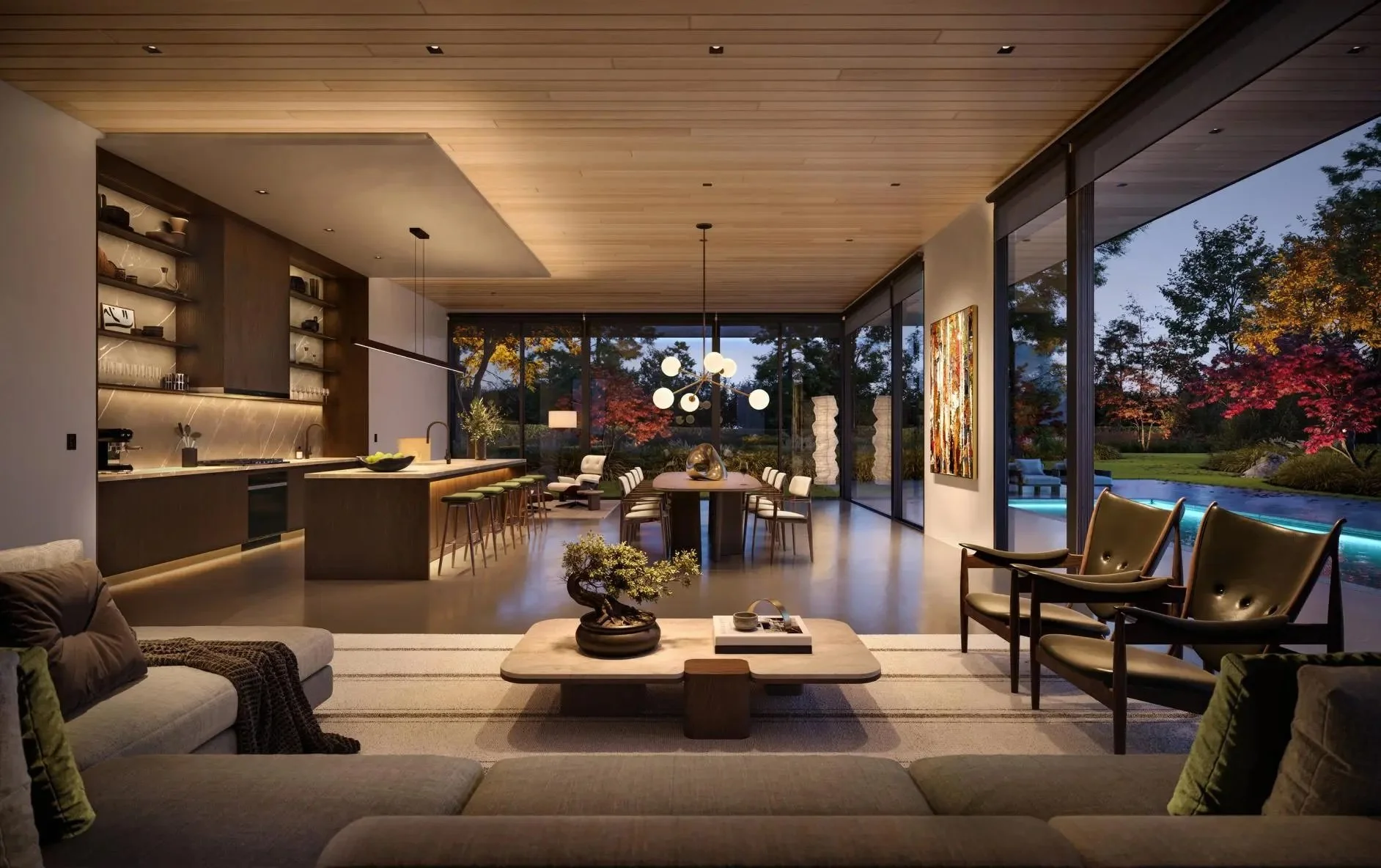
The transition from midday to evening is all about going from "dim-to-warm". Light fixtures should gradually increase their illumination to ensure you’re free to go about your life, but with a warmer tone than they had in the morning. Somewhere between 1800k and 2700k will result in a golden hue that encourages your body to start increasing melatonin production again. As an added bonus, this temperature of light brings out the best in finished wood, giving it a near-luminous quality.
Finally, as bedtime draws near, smart fixtures can be programmed to automatically and gradually dim while maintaining that warmer tone. Ketra lights by Lutron do an exceptional job of this, providing an unprecedented level of color accuracy that persists at every level of illumination, even when dimmed to 0.1%.
Night: Total Darkness and Safe Navigation
The final phase of human-centric lighting design is actually more about eliminating light. To encourage high-quality REM sleep, your architecture and shades should work together to create a perfectly dark space with near-zero light intrusion. Blackout side channels can be used along window edges to eliminate the ‘light halo’ effect around shades. But of course, such darkness also needs to be easy to lift as soon as someone needs to get up in the night. For this, installing motion-activated, low-level amber lights close to the ground will do the trick. This ‘toe-kick’ lighting keeps bathroom trips safe without disrupting your REM cycle or shocking your brain back to complete wakefulness.
Wellness as an Architectural Layer
Real luxury home design requires more than just fancy materials and a high square footage. Real luxury also means a home that comprehensively supports your health and happiness. Human-centered lighting is critical to achieving that lofty standard. Reach out to our lighting designers at Architechne, and we’ll help you achieve a circadian rhythm-informed lighting plan that effortlessly synchronizes with you.