Designing Luxury Homes with Invisible Technology
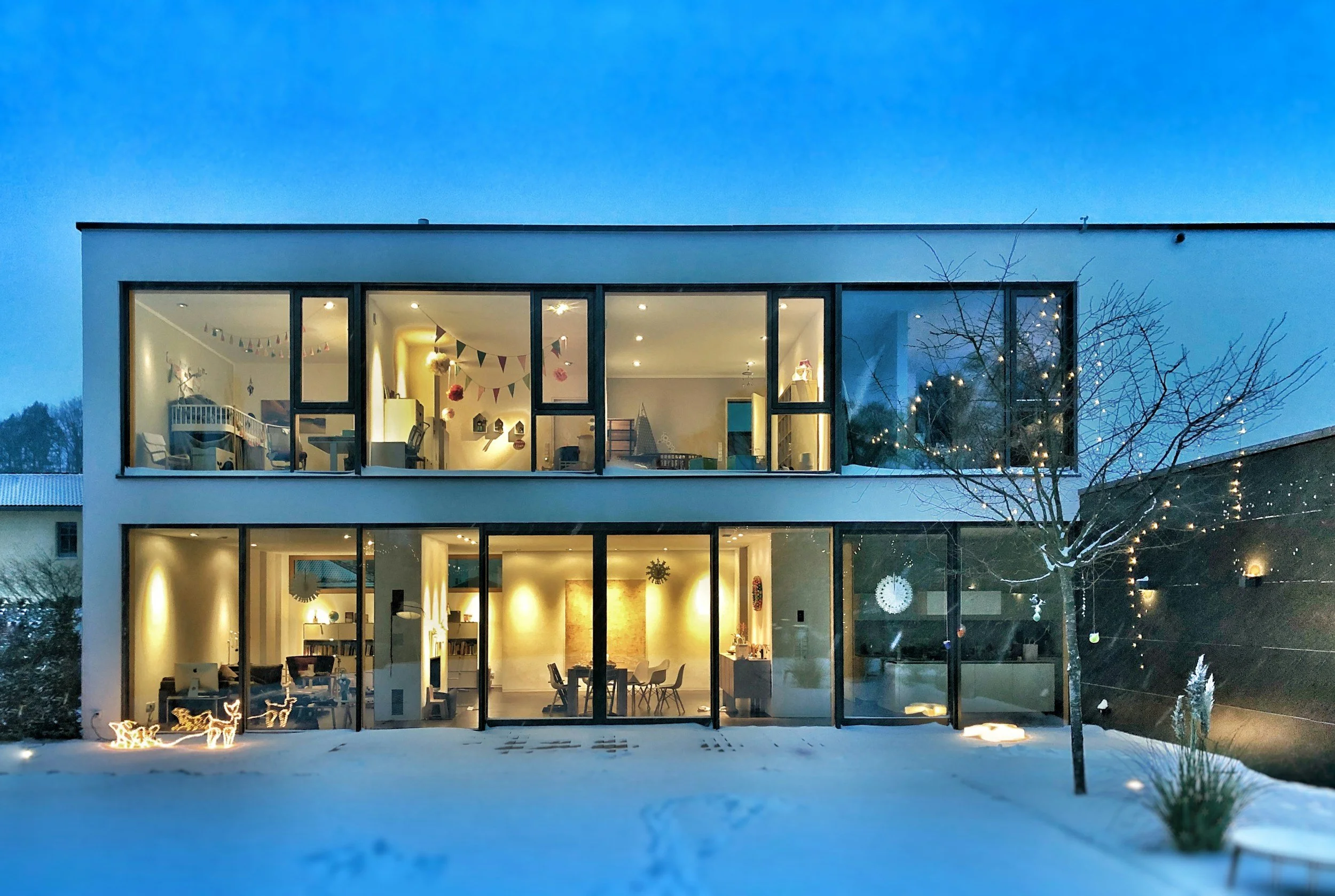
The impossible dreams of twenty years ago have become today's home technology table stakes in high-end new construction or major remodels. So much so that, frankly, showing off with prominent gadgets and infrastructure is no longer the luxury play. It’s been replaced with the so-called ‘Invisible’ approach, where perfectly hidden and disguised technology solutions and whole home automation serve as today's ultimate status symbol. In other words, a home that simply works for your lifestyle, with minimal visible hardware.
In this post, we’ll discuss how to prevent ‘wall acne’, as it’s called in the low-voltage industry, from ruining your sophisticated setup. Ditch the standard smart switches and thermostats that clutter up your millwork and stone, and embrace a better view with perfectly camouflaged home technology solutions.
Architectural Audio: The Art of Disappearing Sound
When your multi-channel audio setup is all out in the open, it tends to hog floor space and dominate the visuals. Invisible speakers are a high-performance, truly invisible fix for both problems, creating a listening experience that feels phenomenally organic and immersive. Transducers are installed in the walls or ceiling, then covered with the same drywall, paint, or wallpaper as everything else. Once in place, they transmit vibrations to the wall or ceiling, allowing the sound to flow directly from the room itself.
Another sleek solution is to use small-aperture speakers. These devices require the same minuscule 2-inch footprint as many luxury recessed lighting fixtures. So, while not technically invisible, they’re so well hidden that you have to search to find them. And for those who still want to feel the bass, concealed subwoofers can be achieved with specialty units that hide in faux HVAC vents or baseboards.
Hidden Video: Vision Without the Screen
Has this happened to you? You walk into a beautiful living room. Its architecture and interior design are flawless, creating an undeniably relaxing ambiance. Or at least they would, if it weren’t for the TV. It’s always hanging around, like an ominous black hole, staring down anyone who dares to use the space without turning it on.
Hiding the TV when you’re not using it is critical for creating a space that feels truly top-of-the-line. One solution is to install a motorized ceiling lift that can raise and lower your TV from a hidden attic pocket, or flip it into place from a ceiling tray. Or, if you want to make sure that that space on the wall still always has something you can look at, there are articulating art frames. These frames slide an art canvas over the screen when it’s not in use.
But what about TV screens in other rooms? Say, the bathroom? Mirror glass integration can keep the screen perfectly hidden behind a one-way mirror, transforming any vanity into a high-definition display on command.

Shading & Lighting: The Invisible Backbone
Invisible tech isn’t just about disguising your entertainment devices. It extends to everything, including your home’s lights and shades. Critically, shades and blinds must be planned at the framing stage to get a perfectly hidden effect. Custom-built ceiling pockets are what allow motorized and automated shades to disappear completely into the ceiling header on whatever schedule you desire. And to make the activation of your shades, lighting, and climate controls fully automatic, invisible flush-mounted sensors can be built in and programmed to track metrics like room occupancy and temperature and respond accordingly.
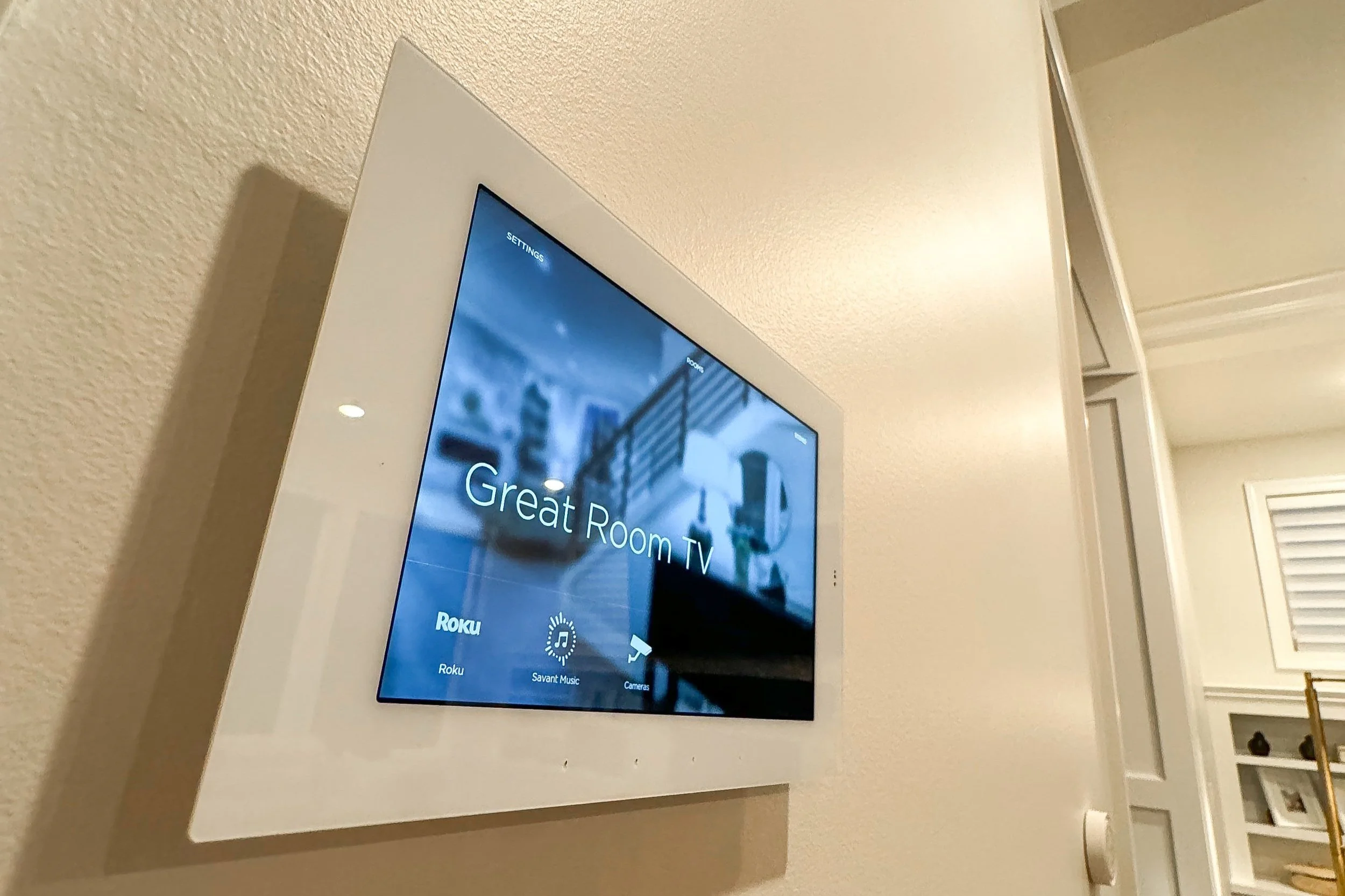
As for the switches to control it all, most homeowners understandably still want some form of on-the-wall device. But even then, you can significantly reduce the visual clutter by avoiding a massive bank of standard lighting switches and tech control switches. Smart technology manufacturers like Lutron and Control4 offer elegant, custom-engraved keypads that consolidate all of your controls at a single, discrete point. If you want to learn more about the best high-end whole home automation systems, check out our article here.
Pre-Wiring: The Infrastructure of Invisibility
The dream of a near-invisible tech footprint is possible, allowing the elegance of your home’s materials and design to take center stage truly. However, this effect can only be achieved with careful planning from the start of a new construction or major remodel project.
Specifically, invisible technology requires a professional low-voltage wiring plan to be developed and executed during the "open-stud" phase of your home’s construction. It also requires quality equipment racks housed in a dedicated, cooled mechanical room away from the main living space. Both of these elements are easy to execute, but only so long as you address them early on in your build process. That’s where a luxury home automation consultant, sometimes called a smart home integrator, comes into play.

Partnering With Your Architect
Architechne’s technology and installation experts bridge the gap between your architect’s aesthetic vision and your functional needs as the homeowner. We elevate your home’s design without compromising on visuals or performance. Schedule an architectural technology consultation today for your new construction or major remodel project.